Demographic Changes Guiding Priorities for Features in India's Blended Mobile Entertainment Platforms
Written by Wendy Lange · Aug 19, 2026
Demographic Changes Guiding Priorities for Features in India's Blended Mobile Entertainment Platforms
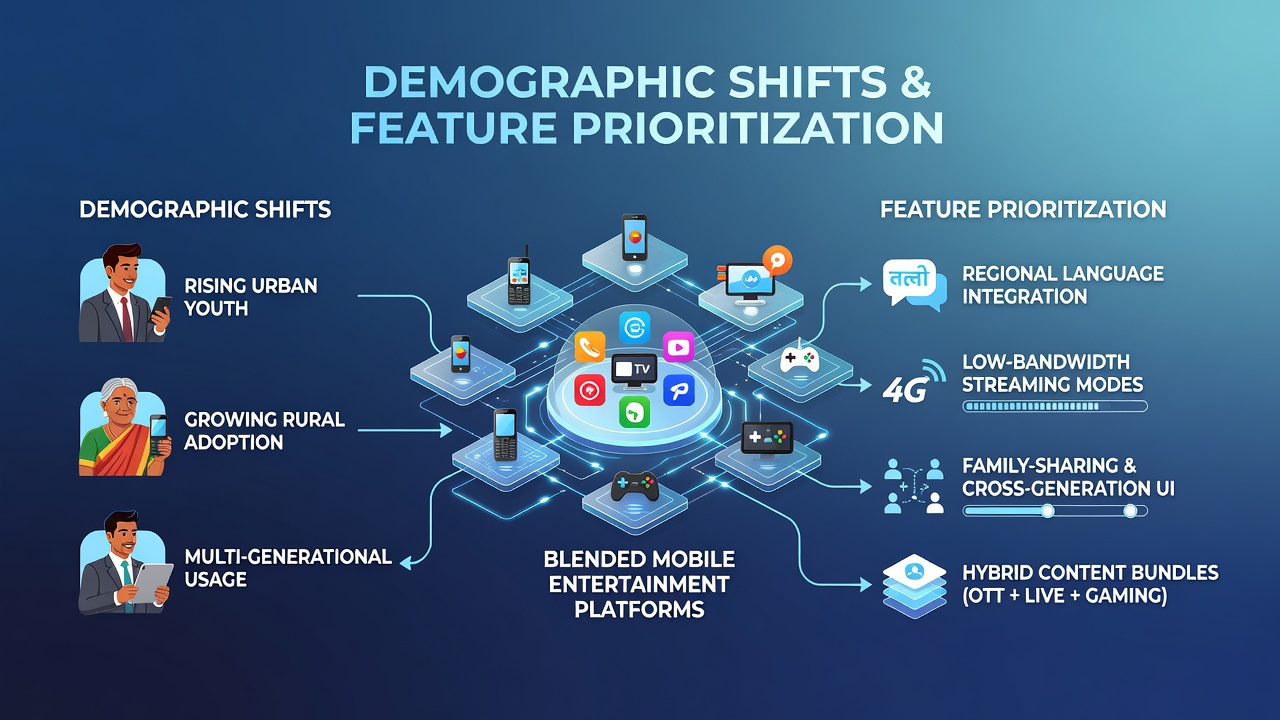
India's population structure continues to evolve with a median age remaining near 28 years as of August 2026, and this youth bulge combined with rising smartphone penetration drives platform developers toward specific feature sets in blended mobile entertainment applications, which combine gaming, live events, and interactive content. Data from the Telecom Regulatory Authority of India shows mobile subscriptions exceeding 1.2 billion, with urban centers accounting for 55 percent of active data users while rural areas post annual growth rates above 20 percent in new connections.
Youth Population and Session Design Preferences
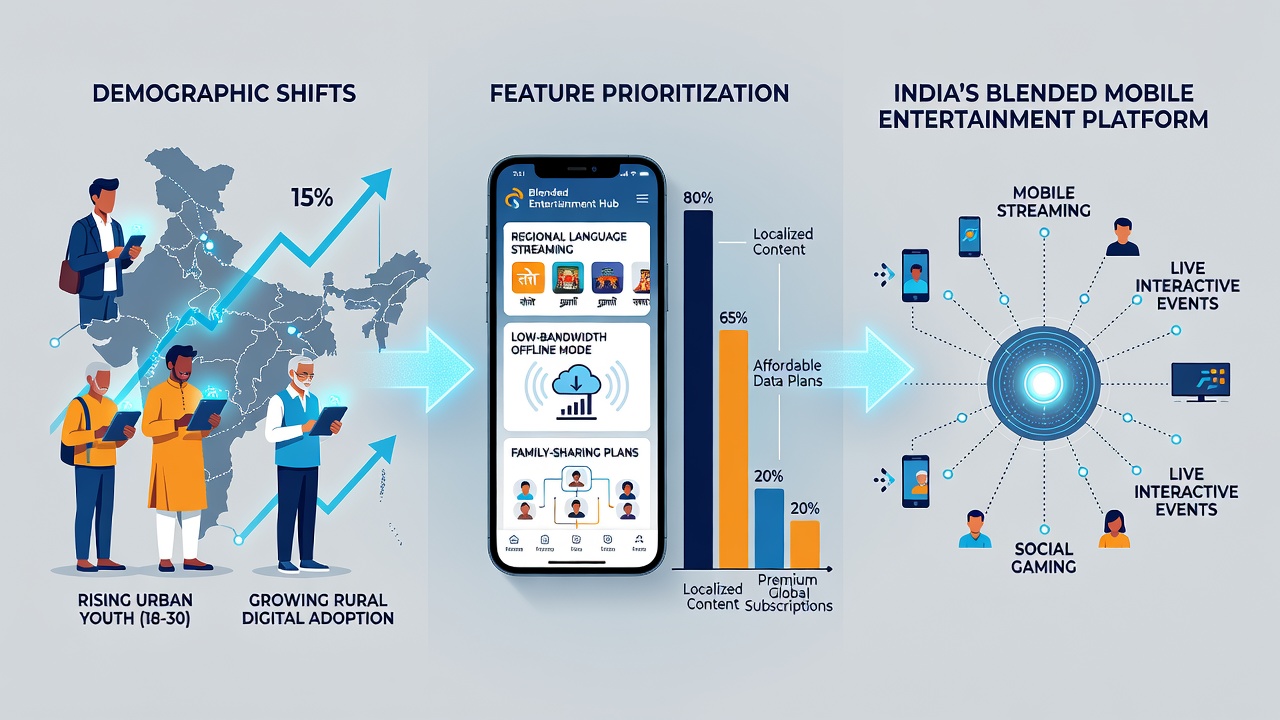
Young adults aged 18 to 35 represent over 65 percent of active users on these platforms, and researchers tracking engagement patterns note that this group favors shorter session lengths with quick reward mechanics rather than extended play formats. Developers respond by integrating bite-sized challenges and real-time leaderboards that sync across multiple modules, allowing seamless switches between entertainment types without requiring lengthy logins or account verifications. Studies from the Indian Institute of Management indicate that platforms implementing these modular designs see average daily active users climb by 18 percent within six months of rollout.
Regional language support emerges as another direct outcome of demographic mapping, since Hindi, Tamil, and Bengali speakers together comprise nearly 70 percent of the under-30 population in tier-two and tier-three cities. Applications now embed voice navigation and localized interfaces as standard features, reducing drop-off rates during onboarding phases according to internal analytics shared by several major operators.
Gender Distribution and Accessibility Adjustments
Female participation in blended mobile entertainment has risen steadily, reaching 38 percent of total users by mid-2026 based on aggregated industry reports. This shift prompts prioritization of safety-oriented tools such as privacy toggles, customizable notification controls, and community moderation layers that filter interactions. Platforms incorporate these elements early in development cycles because usage data reveals higher retention when such options appear within the first three sessions. Observers note that applications offering gender-specific content recommendations, including family-oriented events or collaborative challenges, record improved completion metrics compared to those maintaining uniform feature exposure.
Urban Migration Patterns and Connectivity Features
Internal migration from rural districts to metropolitan hubs continues at scale, with the Ministry of Housing and Urban Affairs recording over 12 million annual relocations. This movement creates demand for cross-device synchronization and offline caching capabilities, since users frequently encounter variable network conditions during travel. Feature roadmaps now allocate resources to progressive web app versions and low-data modes that preserve core functionality, allowing continued access to live segments and personalized feeds without full connectivity. One analysis from the National Council of Applied Economic Research links these adaptations to a 25 percent reduction in churn among users who change locations within a single calendar quarter.
Income Segmentation and Payment Integration Focus
Household income distribution across the user base spans from entry-level earners to upper-middle segments, prompting varied monetization approaches. Lower-income cohorts demonstrate stronger engagement with reward-based entry points and micro-transaction thresholds, while higher earners respond to tiered subscription models that unlock premium content libraries. Platform teams therefore sequence payment gateway expansions around Unified Payments Interface enhancements first, followed by wallet integrations that accommodate smaller transaction values common in emerging user groups. Figures released by the Reserve Bank of India highlight that UPI transactions in digital entertainment categories grew 42 percent year-over-year through the first half of 2026, underscoring the alignment between demographic spending patterns and technical prioritization.
Regional Cultural Influences on Content Curation
State-level population variations influence content libraries, as platforms serving northern states emphasize cricket-linked events and those targeting southern markets incorporate regional festival tie-ins. Demographic surveys from state statistical bureaus reveal that areas with higher concentrations of working-age migrants prioritize flexible scheduling tools that accommodate shift-based lifestyles. Developers apply these insights during quarterly planning meetings, allocating development bandwidth to location-aware recommendation engines that surface culturally resonant modules without requiring manual user input.
Conclusion
Population metrics collected through government channels and independent research bodies continue to inform roadmap decisions across India's blended mobile entertainment sector. As age structures, gender balances, and geographic distributions shift through 2026 and beyond, feature prioritization remains anchored in observable usage data rather than assumptions. This approach sustains platform relevance amid ongoing demographic transitions while supporting sustained user engagement across diverse segments.